
Self-book
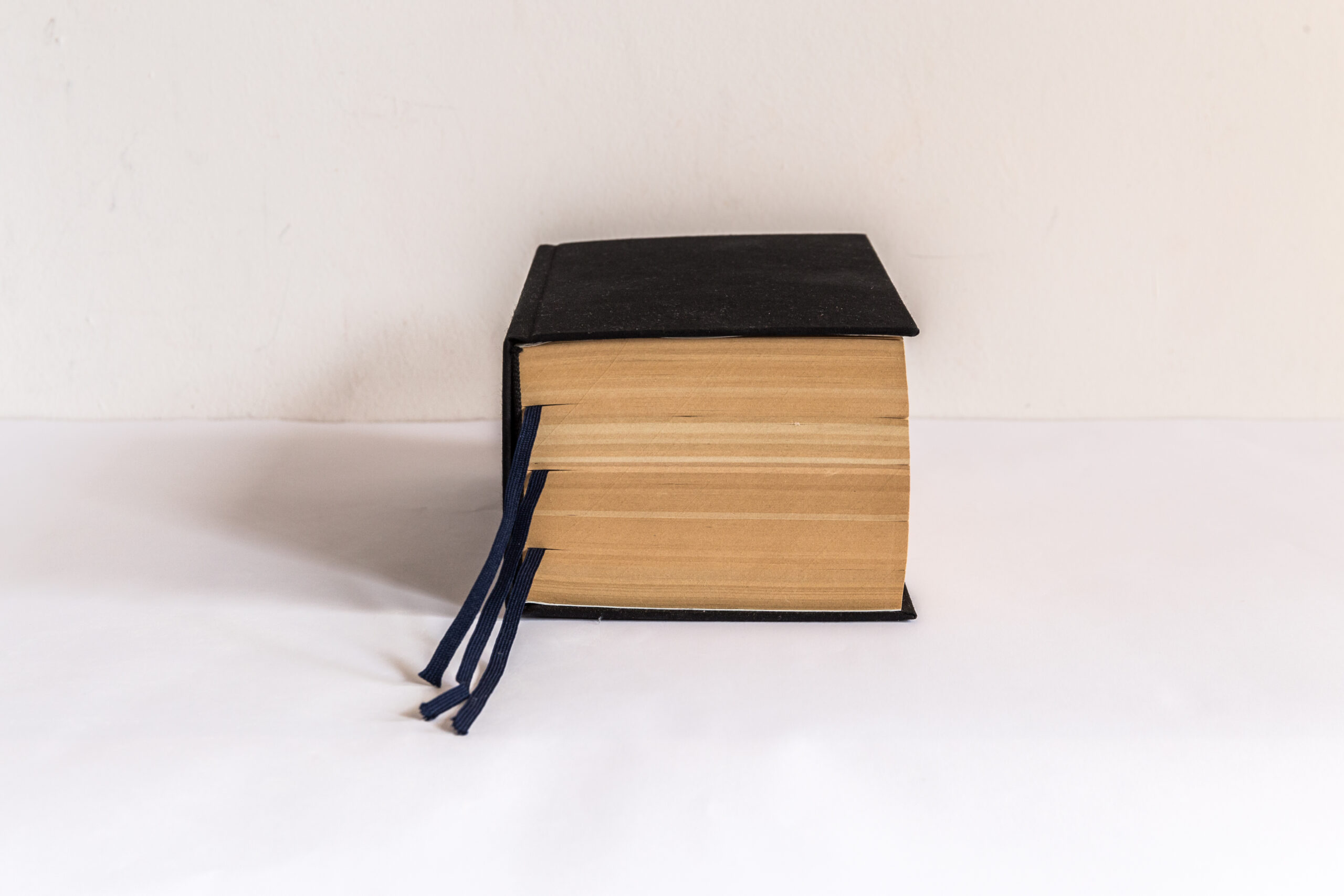
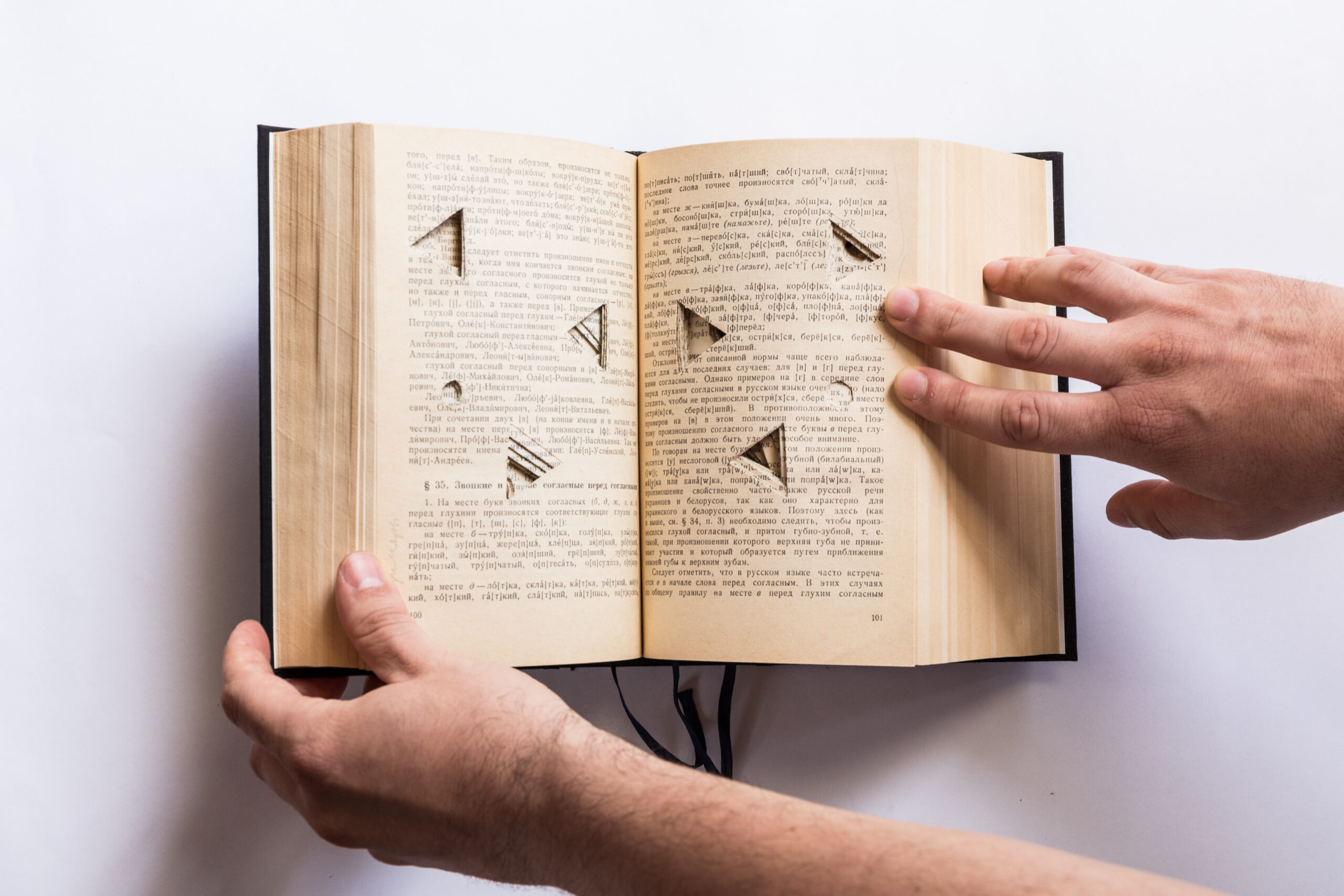
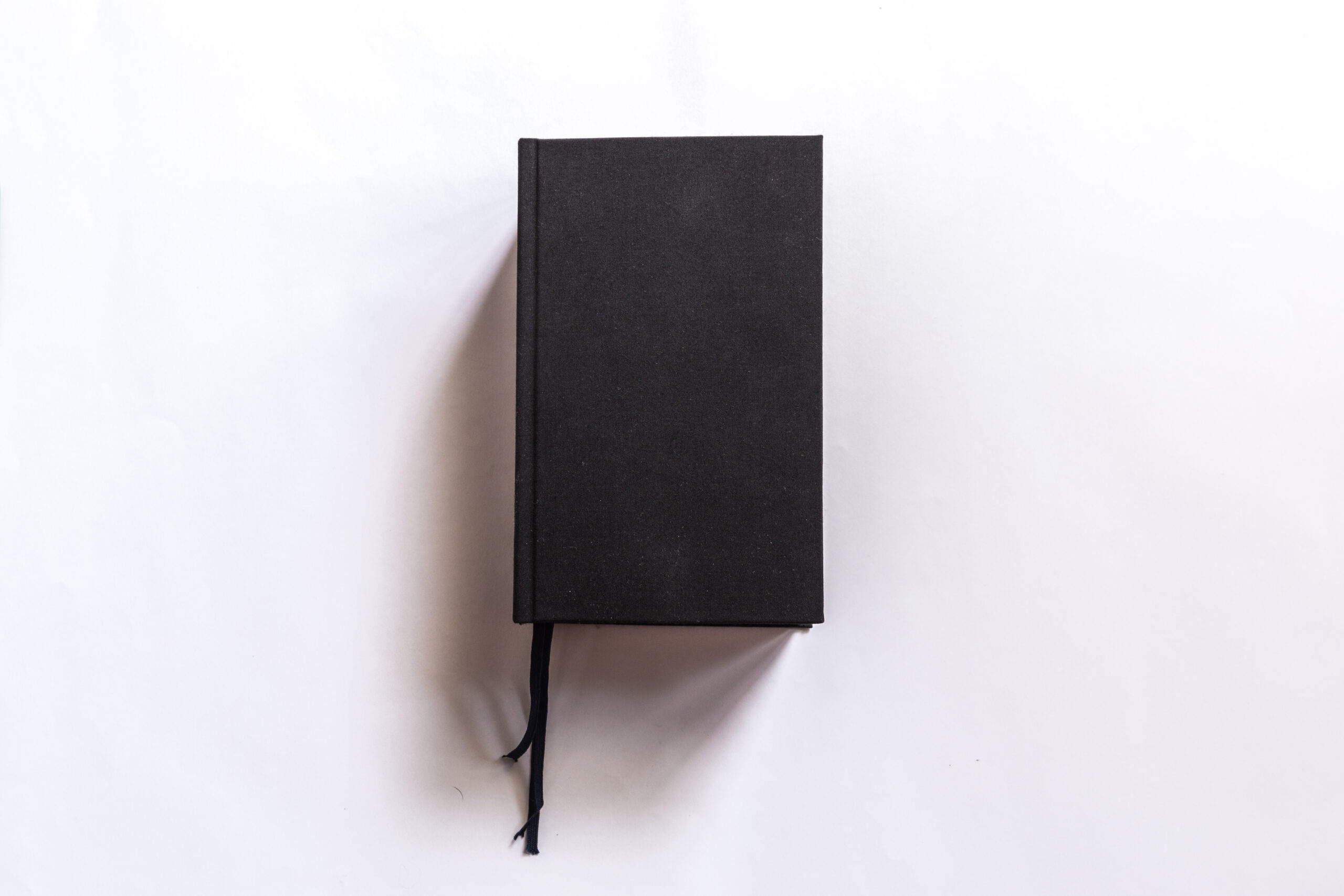
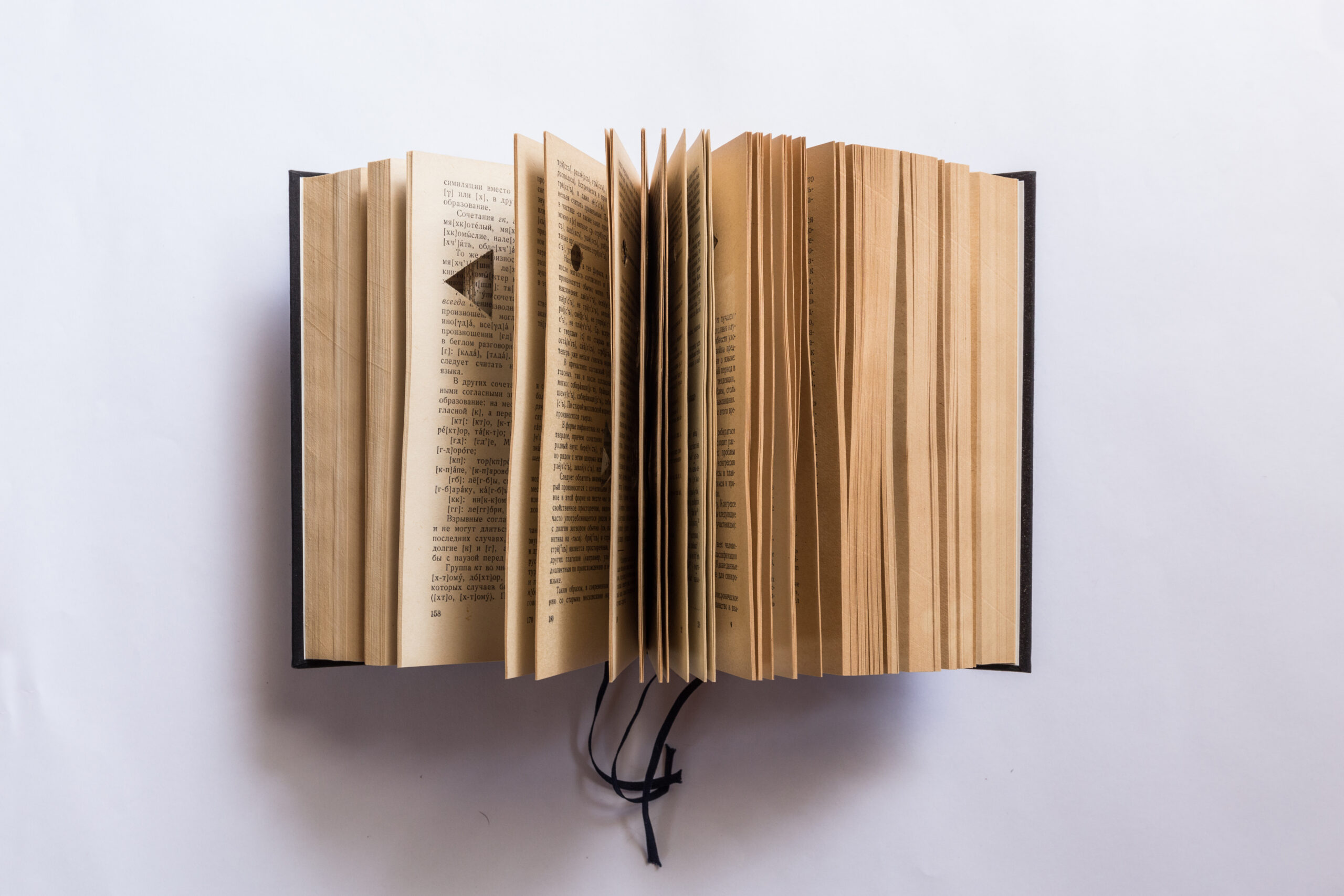
The book was created as a result of research into Suprematism and the practices that preceded and at one time influenced the appearance of Suprematism as a direction in art, primarily works that concerned the spoken or written word. These are primarily the works of the Russian poet, writer and futurist Velimir Khlebnikov, who, together with Aleksei Kruchonikh, devised a linguistic experiment called zaum – an experimental poetic language characterized by indeterminacy in meaning. The book consists of six school textbooks of the Russian language, each page of which is hand-punched with motifs of triangles or circles, and together they form a layered composition that can serve as a guide or textbook for the new Zaumian language, which was created organically, not artificially like Esperanto. The title of the book alludes to Khlebnikov’s “self-sufficient” art and his theory that works do not refer to anything other than themselves. Lohaize printing as a self-book production technique is a process of manually punching the pages with a lohaize – a punch that is normally used for punching cardboard, rubber or textiles. The desire to create a new name for the book and especially a new naming of the production technique come from Khlebnikov’s ideology, and later the Suprematist ideology about the need for something new, about the desire for innovation. In other words, digging up or destroying the old (old books) and creating a template for something new (language or object) starts from the same ideology advocated by the Suprematists.
February 3, 2025